
Follow a mold sample from your Florida home to the accredited lab. Learn what chain of custody means, how analysts process samples and why it protects you.
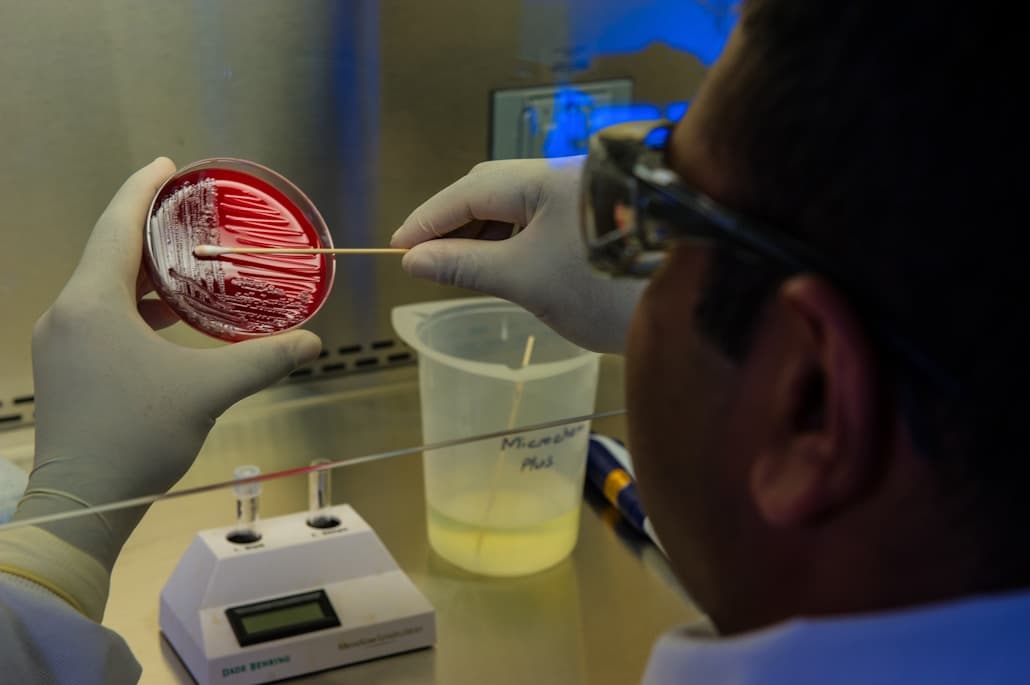
The assessor seals the last cassette, signs a form, and your part of the sampling day is over. What you do not see is the next several days: the courier handoff, the intake desk, the analyst at the microscope and the quality review before a report lands in your portal. Understanding that chain is what lets you trust the numbers when a remediator, adjuster or buyer questions them.
The short version
Chain of custody is a documented trail that follows each sample from your home to the laboratory bench. Every cassette, tape lift, swab and bulk bag is labeled with a unique identifier at the moment of collection, logged on a form that records location, time, volume and conditions, sealed, and handed off with signatures at each step. At the laboratory, the sample is logged in, analyzed by trained personnel using standardized methods, reviewed, and reported. That paper trail is what makes the result defensible.
Step one: labeling and sealing on site
Documentation begins before the pump turns on. For each sample the assessor records:
- A unique sample number tied to the project
- The exact location (room, wall, height, orientation)
- The sample type (spore trap, tape, swab, bulk)
- Start and stop time and flow rate for air samples, which determine the air volume
- Temperature, relative humidity and weather notes
- Any relevant observations, such as visible growth, odor or recent water
The cassette or bag is sealed immediately. For spore traps, the inlet and outlet caps go back on and a tamper-evident label often covers them. Nothing is opened again until it reaches the analyst.
Step two: the chain of custody form
The chain of custody form travels with the samples. It lists every sample number, the analysis requested for each, the collector's signature and the date and time the samples were relinquished. When a courier or lab intake clerk receives the package, they sign and time-stamp receipt. If the samples change hands again inside the laboratory, that handoff is recorded too.
The point is simple. At any moment, the documentation can answer who had the samples, where they were and whether the seals were intact. For a homeowner this may feel like overkill. For a landlord-tenant dispute, an insurance claim or a real estate transaction, it is the difference between evidence and hearsay.
Step three: packaging and transport
Samples are packed to prevent damage and cross-contamination. Cassettes are kept upright and cushioned so the adhesive slide is not jarred. Bulk samples are double bagged. Samples requiring culture are kept cool and shipped promptly so organisms neither die nor overgrow in transit. Shipping is by overnight courier or direct delivery to the laboratory, and the tracking number becomes part of the project record.
Step four: laboratory intake
At the laboratory, intake staff compare the physical samples to the chain of custody form. They check that:
- Every sample listed is present and every sample present is listed
- Seals are intact and labels match
- Sample conditions are acceptable (not crushed, not leaking, within holding time for culturable samples)
Discrepancies are noted and the assessor is contacted before analysis proceeds. The lab assigns its own internal tracking numbers linked to the field numbers, and the samples move to the appropriate analysis section.
Step five: analysis
Different sample types follow different paths.
| Sample type | Laboratory method | What is reported |
|---|---|---|
| Spore trap air cassette | Slide is stained and read under a microscope; spores identified and counted along the trace | Spore types, raw counts, spores per cubic meter, debris rating |
| Tape lift or swab (direct exam) | Mounted on a slide and examined microscopically | Fungal structures present, genera identified, qualitative density |
| Bulk material (direct exam) | Portions examined under stereo and compound microscopes | Growth present or absent, genera, extent |
| Culturable air or surface sample | Plated on growth media, incubated, colonies identified | Colony-forming units, identification often to species |
Direct microscopic methods rely on morphology, meaning the analyst identifies spores by shape, size, color, septation and surface texture. This is a skill built over years and is why accredited laboratories matter. Culture methods identify organisms by how they grow and look as colonies, which can reach species level but miss spores that are dead or unwilling to grow on the chosen medium.
Step six: quality control and review
Accredited laboratories do not simply read a slide and send a number. Analysts are regularly checked against known reference slides, a portion of samples is re-read by a second analyst, microscopes and pumps used for calibration are maintained on a schedule, and the laboratory participates in external proficiency programs where blind samples are sent in and graded. The report you receive has typically passed a supervisory review before release.
Step seven: the report
The laboratory report lists each sample by field and lab number, the method used, the results and any analytical notes such as overloaded slides or low volume. It generally does not interpret the findings for your building. That is the assessor's job.
UES receives the raw laboratory report, interprets it against the moisture map, thermal findings and visual observations, and posts both the raw data and the interpretation in the UES Client Portal. You see exactly what the lab reported, not a summary filtered through someone with a remediation estimate to protect.
Why independence at every link matters
Florida keeps mold assessment and mold remediation as separately licensed professions through the DBPR, precisely to keep diagnosis separate from treatment. Chain of custody and independent laboratory analysis extend that same principle to the evidence itself. UES does not analyze samples in-house, does not perform remediation and does not accept referral fees. The samples go to an accredited laboratory we have no financial stake in, and the results are what they are.
This matters most in situations where the findings will be challenged:
- Insurance claims after a water intrusion event, where an adjuster may question whether growth preceded the loss
- Real estate transactions, where a seller disputes a buyer's inspection
- Rental disputes between tenants and landlords
- Commercial properties where occupants have raised health complaints
In each case, a complete chain of custody and an independent laboratory report are what hold up.
What can go wrong without it
Samples collected without documentation, carried loose in a truck for days, or read by the person who collected them invite reasonable doubt. Common failures include:
- Missing or inconsistent sample locations, so nobody can say which wall a result belongs to
- Unrecorded air volumes, which make a spore count impossible to convert to a concentration
- Broken or missing seals
- Culturable samples held too long, producing overgrowth or die-off
- Analysis by unaccredited personnel without proficiency testing
Any one of these can turn a sample into an opinion.
When to call UES
If a result is going to be used to scope a remediation, support a claim or settle a dispute, the way the sample is handled matters as much as the sample itself. UES collects every sample under documented chain of custody and sends it to an independent accredited laboratory, with full results delivered through the Client Portal. We serve Orlando, Leesburg, Sanford, Jacksonville and the rest of Florida. Book an assessment online or call (407) 438-4684, Monday through Friday, 9:00 AM to 5:30 PM. Our comprehensive mold assessment page describes the full process.
Related reading
Frequently asked questions
What does chain of custody mean for a mold sample?
Chain of custody is the documented, unbroken record of who handled a sample from the moment it was collected until the laboratory reports the result. Every transfer is signed and dated. It proves the sample analyzed is the sample taken from your home, in the condition it was collected, without tampering or substitution.
Why does my assessor use an outside lab instead of testing on site?
Independent accredited laboratories employ trained analysts, maintain calibrated microscopes and reference collections, and participate in proficiency testing programs. Separating collection from analysis also removes any incentive to shade the results. A sample read by the same person who sold the inspection, or by a company that also sells remediation, carries far less weight.
How long does it take to get mold lab results back?
Standard turnaround for spore trap and surface samples is typically a few business days from the time the lab receives them. Expedited analysis is often available for situations such as real estate closings or active insurance claims. Your assessor will tell you the expected timing when the samples are collected.
Worried about what you just read?
An independent UES assessment tells you exactly what is going on, what caused it and what to do next. Book online or call.

