
Settle plates and mail-in kits promise cheap mold answers. See what DIY mold test kits actually measure, why they mislead Florida homeowners and what professional testing adds.
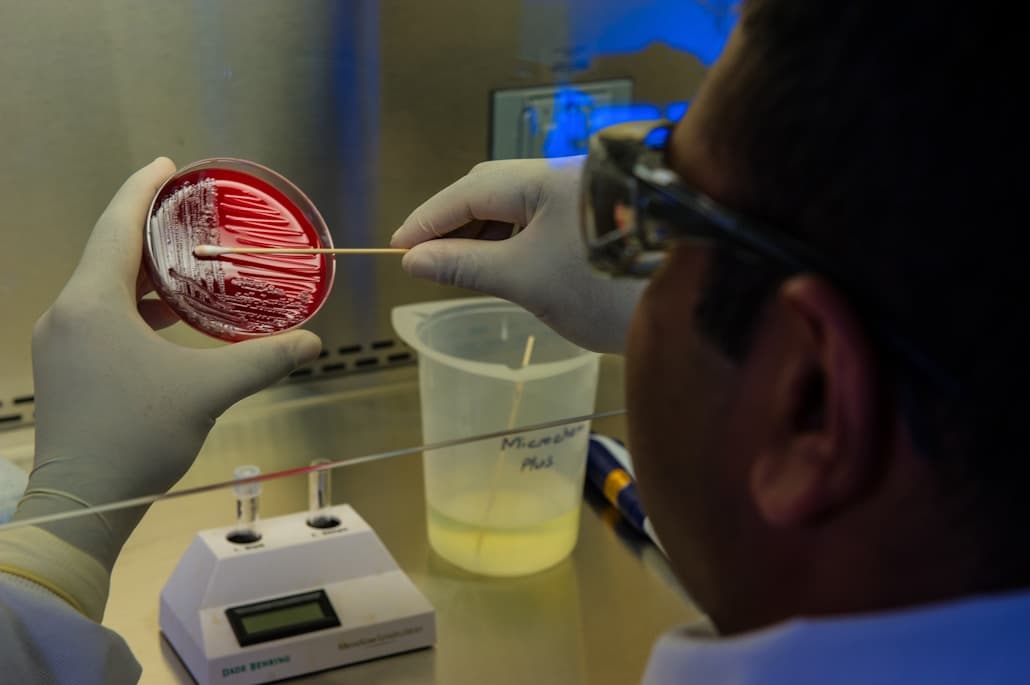
The kit on the hardware store shelf costs less than lunch and promises to tell you whether your home has a mold problem. A few days later the petri dish is covered in fuzzy colonies and you are convinced the house is contaminated. The truth is that the dish would have looked the same in almost any Florida home, including one with no mold problem at all. Here is what those kits actually measure, and what they leave out.
The direct comparison
A DIY mold test kit tells you that mold spores exist in your air, which was already true. Professional testing by a licensed assessor tells you whether the types and amounts indoors differ from the outdoors, where the moisture is that supports growth, what is growing on a specific surface, and what to do about it. The kit produces a result. The assessment produces an answer.
How the common DIY kits work
Settle plates
The most common kit is a petri dish with nutrient agar. You open it, leave it on a counter for a set time, close it and wait for colonies to grow. Some kits let you mail the dish to a lab for identification.
What it measures: viable spores heavy enough to fall onto the dish during the exposure window and able to grow on that particular agar.
What it misses: spores that stay suspended (the small, light ones most relevant to breathing), spores that are dead but still allergenic, spores that do not grow on that medium, and any information about concentration, because no air volume was measured.
Swab and tape kits
These let you sample a visible spot and mail it in. Used correctly, they can confirm that a stain is fungal and identify the genus. They cannot tell you how far growth extends, whether it is active, or what is behind the surface.
Air pump rental kits
A few services rent a pump and cassettes. This is closer to a professional method, but the sampling plan, placement, flow calibration, outdoor control and interpretation are left to the homeowner, and that is where results go wrong.
Why settle plates mislead
A settle plate result has no denominator. A professional spore trap reports spores per cubic meter because the pump pulled a known volume of air. A dish left open collects an unknown amount of air for an uncertain effective exposure, so the colony count means nothing quantitatively. Beyond that:
- Everything grows. Florida outdoor air is spore-rich. Indoor dishes will grow colonies in any house.
- Gravity bias. Large, heavy spores fall onto the plate; the small Aspergillus and Penicillium spores that drive many indoor problems stay airborne and are under-represented.
- Media bias. Only organisms that like the chosen agar will grow. Others are present but invisible.
- Overgrowth. Fast-growing colonies cover slow ones, hiding what might matter.
- No outdoor control. Without a dish exposed outdoors at the same time, there is no baseline.
- No location logic. One dish on a kitchen counter says nothing about a bedroom wall cavity.
The result is a plate that looks alarming in a healthy home and can look unremarkable in a home with hidden growth behind a sealed wall.
What professional testing adds
| Element | DIY kit | Professional assessment |
|---|---|---|
| Visual inspection by trained eye | No | Yes, inside and out |
| Moisture source detection | No | Thermal imaging, pin and pinless meters |
| Sampling plan based on findings | No | Yes, designed room by room |
| Measured air volume | No | Calibrated pump, documented flow and time |
| Outdoor control sample | Rarely | Always with indoor air sampling |
| Wall cavity sampling | No | When moisture findings call for it |
| Chain of custody | No | Yes, every sample |
| Accredited lab analysis | Sometimes | Always |
| Interpretation against building conditions | No | Yes, by a licensed assessor |
| Remediation protocol and clearance criteria | No | Yes, when growth is confirmed |
| Accepted by insurers, buyers, courts | No | Yes |
The gap is not in the microscope. It is in everything that happens before and after the sample.
The moisture question kits cannot answer
Mold is a moisture symptom. The reason an assessor spends most of the visit with a thermal camera and moisture meters rather than a cassette is that finding the water is what leads to a solution. A kit cannot tell you that the slab is wicking at the base of the family room wall, that the supply register is sweating into the ceiling, or that the shower pan has been leaking into the bedroom wall for a year. The comprehensive mold assessment at UES is built around that moisture work, and the sampling plan follows from it.
Where a kit can be useful
In fairness, a tape or swab kit can serve a narrow purpose: confirming that a visible stain is mold rather than dirt, soot or efflorescence. If that is the only question and the area is small and on a non-porous surface, a kit may settle it. The moment the question becomes "how bad is it," "where is it coming from" or "is it affecting the air," the kit has nothing to offer.
The cost of a false sense of security
The more dangerous failure is not the alarming dish; it is the reassuring one. A homeowner with a persistent musty odor runs a settle plate, sees a modest number of colonies, and concludes the home is fine. Meanwhile growth behind the drywall in a closed wall cavity continues. Months later the problem is larger, the remediation scope is larger, and the window for a simple repair has closed. A professional assessment that includes cavity sampling where moisture readings warrant it would have found it.
Independence matters as much as method
Even professional-looking testing can be compromised when the tester also sells remediation. Florida licenses assessors and remediators separately through the DBPR and keeps the roles apart for this reason. UES does not perform remediation and does not accept referral fees, so the sampling plan is designed to answer your question rather than to support an estimate. Results, lab data and any protocol are delivered through the UES Client Portal.
When a professional assessment is the right call
- A musty odor without a visible source
- Any water event: leak, flood, roof damage, slab or plumbing failure
- Visible growth on drywall, wood or ceiling material, or in more than one spot
- Growth that returns after cleaning
- Symptoms that improve when occupants are away from home (discuss these with your physician)
- Buying, selling or renting a property
- Any situation involving an insurance claim or dispute
For allergen and particulate concerns beyond mold, indoor air quality and allergen testing uses instruments no retail kit includes.
When to call UES
If a kit has left you with more questions than answers, or you want to skip the detour, an independent assessment in Orlando, Lake County, The Villages or anywhere in Florida will tell you what is actually happening in your home. Book an assessment online or call (407) 438-4684, Monday through Friday, 9:00 AM to 5:30 PM.
Related reading
Frequently asked questions
Do home mold test kits work?
Settle plate kits will almost always grow mold, because mold spores are in every home's air. What they cannot do is tell you whether the amount or type is abnormal, where it is coming from or whether there is a moisture problem behind a wall. A positive result is nearly guaranteed and nearly meaningless without a comparison and an inspection.
Why does a DIY kit grow mold even in a clean house?
Outdoor air in Florida carries large numbers of spores year round, and some of them are always indoors. A petri dish left open for an hour collects whatever settles onto it, and the nutrient agar grows the viable ones into visible colonies. That is normal fungal ecology, not a contamination finding.
Can a DIY test replace a mold inspection for a home purchase or insurance claim?
No. Lenders, insurers, attorneys and buyers look for documentation from a licensed assessor with samples analyzed by an accredited laboratory under chain of custody. A kit result has no sampling plan, no outdoor control, no moisture data and no professional interpretation, so it carries no weight in those settings.
Worried about what you just read?
An independent UES assessment tells you exactly what is going on, what caused it and what to do next. Book online or call.