
Air sampling and surface sampling answer different questions about mold. See how Florida assessors choose between them and what each method can and cannot tell you.
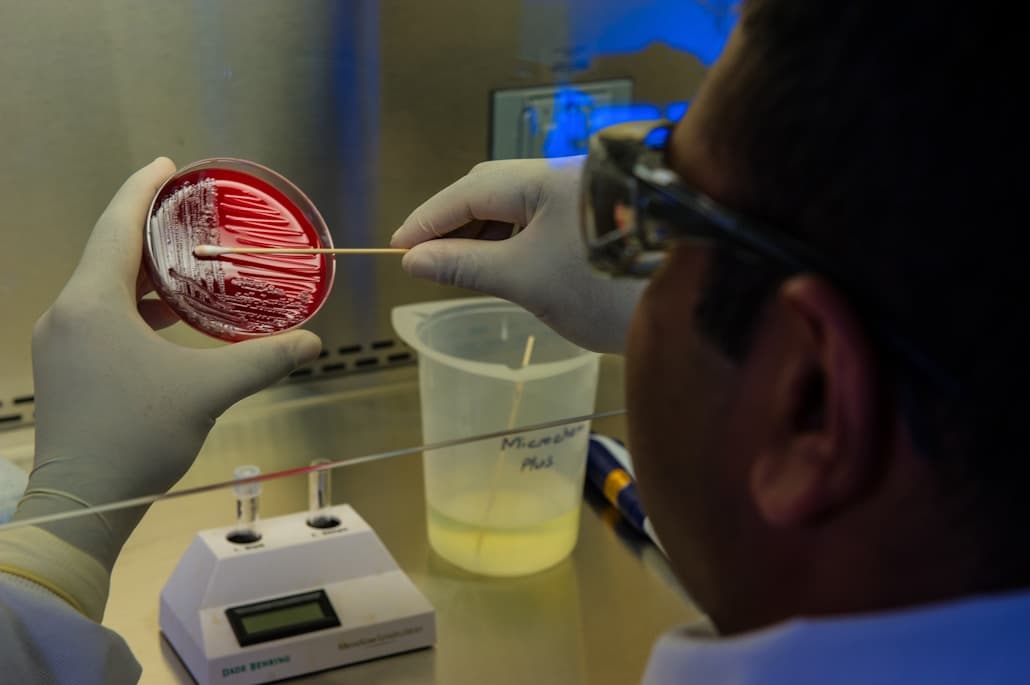
Two homes in the same Orlando neighborhood can have the same musty smell and need completely different sampling strategies. One has a dark patch spreading above the shower; the other has no visible growth at all but a bedroom that smells like a damp basement. Knowing which sampling method answers which question is the difference between a report that solves the problem and one that just adds to the confusion.
The direct answer
Air sampling measures what is suspended in the air you breathe. Surface sampling identifies what is growing on a specific material. Air samples answer "is there an indoor source affecting this room, and how badly?" Surface samples answer "what is this stain, and is it mold?" Neither method replaces the other, and a competent assessor chooses based on the question the building is asking.
How air sampling works
The most common air sampling method in residential and light commercial work is the spore trap. A calibrated pump draws a known volume of air through a cassette containing a sticky slide. Spores, hyphal fragments, pollen and other particles stick to the slide, which the laboratory later examines under a microscope and counts.
Key characteristics of a spore trap air sample:
- It captures both viable and non-viable spores, which matters because dead spores can still trigger allergic responses.
- Results are reported as spores per cubic meter of air for each genus identified.
- It is a snapshot. A five or ten minute sample reflects conditions during that window.
- It always needs an outdoor comparison sample collected the same day under the same conditions.
Culturable (viable) air sampling is a second approach, in which air is impacted onto a growth medium and the lab incubates the plate. It identifies organisms to species level but only counts spores that are alive and willing to grow on that medium. It is useful in specific investigations but is slower and misses a large share of what is actually present.
What air sampling is good at
- Detecting hidden growth behind walls, under flooring or inside wall cavities when paired with moisture readings
- Establishing whether a visible problem is affecting the breathing zone
- Setting a pre-remediation baseline that post-remediation verification can be measured against
- Investigating complaints when nothing is visible
What air sampling cannot do
- Identify the exact location of a source on its own
- Provide a "safe" or "unsafe" number, because no universal numerical health threshold exists
- Represent conditions at a different time of day, after the air conditioner cycles, or after a door is opened
That last point is why your assessor will ask you to keep windows closed and the HVAC running normally before the visit. Florida homes with the air handler constantly moving air can show very different counts depending on whether the system was running when the pump was started.
How surface sampling works
Surface samples collect material directly from a suspect area. There are three common forms.
| Method | How it is collected | Best use |
|---|---|---|
| Tape lift | Clear adhesive tape pressed on the surface and mounted on a slide | Confirming visible growth and identifying structure |
| Swab | Sterile swab wiped across a measured area | Irregular or textured surfaces, HVAC components |
| Bulk | A piece of the material itself is removed and bagged | Drywall, insulation, carpet backing, wood |
The laboratory examines a tape or swab under a microscope and reports what fungal structures are present, often with a density description. A bulk sample can be examined directly or cultured.
What surface sampling is good at
- Confirming that a discoloration is fungal rather than dirt, soot, efflorescence or staining
- Identifying the genus, which helps determine moisture history (some molds need very wet conditions, others thrive on humidity alone)
- Documenting growth on contents, furniture or HVAC parts for an insurance file
- Checking whether a surface was adequately cleaned during remediation
What surface sampling cannot do
- Describe airborne exposure
- Rule out growth elsewhere in the home
- Quantify a problem in any meaningful way, since a single tape lift from a heavy patch will always look dramatic
Choosing the method: how assessors think
An assessor walks in with a question, not a cassette. Here is the general decision logic UES applies during a comprehensive mold assessment.
- Visible growth present, source obvious. Surface sample to confirm and identify, plus an air sample in the affected room and an outdoor control. The air sample tells us whether containment during remediation needs to be aggressive.
- Visible growth present, extent unclear. Surface sample, air samples in adjacent rooms, and moisture mapping with thermal imaging to find how far the water traveled.
- No visible growth, musty odor or symptoms. Moisture survey first. Air samples in the complaint area, a control room and outdoors. If moisture meters or the thermal camera flag a wall cavity, a cavity air sample may be collected through a small opening.
- Post-remediation. Air samples inside the containment and outdoors, plus surface samples of remaining framing or slab, measured against the clearance criteria set in the protocol.
The sampling plan is written before the pump turns on, and every sample is logged with location, time, volume and conditions.
Chain of custody and the independent lab
Whichever method is used, the sample is only as credible as the path it takes to the laboratory. UES seals and labels each cassette, tape or bag on site, records it on a chain of custody form, and ships it to an independent accredited laboratory. UES does not analyze samples in-house, and because we never perform remediation, there is no incentive to read the results one way or the other. The findings are what they are.
Results are posted in the UES Client Portal alongside the moisture findings, so you can see how a surface sample from the laundry room wall lines up with the elevated air count in the adjacent hallway.
Florida-specific sampling realities
- Outdoor counts are high year round. Warm, humid air and abundant vegetation keep outdoor spore levels elevated, which is exactly why the outdoor control is non-negotiable.
- Afternoon storms change the air. A sample taken minutes after a downpour can look different from one taken in dry mid-morning air. Assessors note weather conditions for this reason.
- Air conditioning drives everything. Supply registers sweating from condensation can grow mold that a surface swab confirms, while the system distributes spores that an air sample picks up two rooms away. Our indoor air quality and allergen testing frequently combines both methods for exactly this scenario.
- Block walls and slabs. Moisture migrating through block or slab often produces growth on the back of drywall before anything shows on the painted side. Air samples and moisture meters find it; surface samples confirm it once an opening is made.
Questions to ask any assessor about their sampling plan
- Why are you taking this sample here, and what question will it answer?
- Where is the outdoor control being collected?
- Which accredited laboratory analyzes the samples?
- Will I receive the raw lab data as well as your interpretation?
- Will the same sampling locations be used for clearance testing?
If the answers are vague, or if the person offering to sample is also offering to remove the mold, keep looking.
When to call UES
Whether you are staring at a stain you cannot identify or chasing a smell you cannot locate, the right sampling strategy starts with an independent assessor who has no stake in the outcome. UES serves homeowners and property managers throughout Orlando, Lake County, The Villages and the rest of Florida. Book an assessment online or call (407) 438-4684, Monday through Friday, 9:00 AM to 5:30 PM.
Related reading
Frequently asked questions
Can a surface sample tell me how much mold is in the air?
No. A surface sample confirms whether a visible stain or growth is fungal and identifies what kind it is, but it says nothing about airborne spore concentrations in the room. Only an air sample, interpreted against an outdoor control, can describe what occupants are actually breathing.
Do I need both air and surface samples?
Often, yes. Visible growth usually calls for a surface sample to identify it and an air sample to learn whether it is affecting the breathing zone. If there is no visible growth but a persistent musty odor, air sampling plus moisture mapping is typically the starting point. Your assessor should explain why each sample is being taken.
Why does the assessor take an outdoor sample?
Outdoor air in Florida always contains mold spores, and indoor air normally mirrors it at lower levels. The outdoor sample is the baseline. When an indoor sample shows spore types or concentrations that are not explained by the outdoor air, that difference points to an indoor source.
Worried about what you just read?
An independent UES assessment tells you exactly what is going on, what caused it and what to do next. Book online or call.

