Florida's dry-season wildfires and prescribed burns push smoke into Central Florida homes. How it gets inside, how to limit it and when air testing helps.
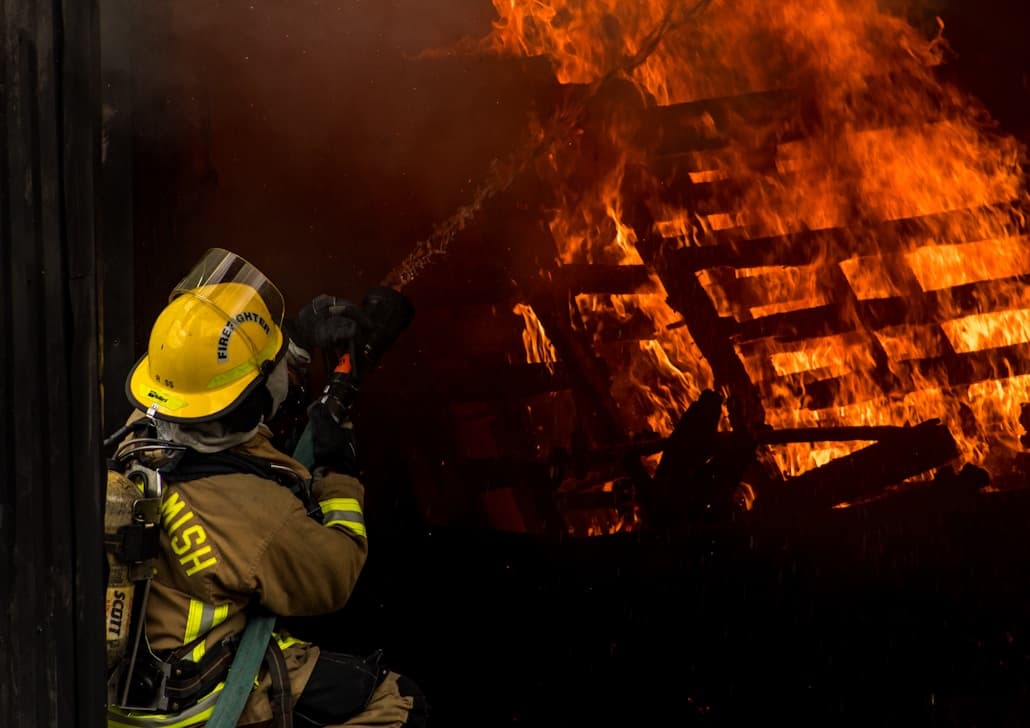
Most people think of wildfire smoke as a western problem, but anyone who has driven I-4 through a brown haze in April or smelled a burn from the Ocala National Forest on a still morning knows Florida has its own version. The state's dry season, its enormous areas of pine flatwoods and scrub, and an active prescribed burning program mean smoke regularly settles over neighborhoods from Marion County down to Osceola.
This post explains how that smoke gets into Florida homes, why the typical house does a poor job of keeping it out, what you can do during an event and when indoor air quality testing is worth doing.
The short answer
Wildfire smoke is mostly fine particulate matter along with gases and odor compounds. It enters homes through envelope leaks, open doors and the air conditioning system, and standard filters do little to stop it. During a smoke event, keep windows and doors closed, run the air conditioning on recirculate with the best filter the system can handle, and consider a portable air cleaner for the rooms where people sleep. Testing shows how much smoke is actually reaching your indoor air and whether lingering odor or residue needs attention.
Florida's smoke season
Florida's wildfire risk peaks in the dry months when rainfall is low, humidity drops and winds pick up. The landscape is built to burn: pine flatwoods, palmetto scrub and sawgrass marsh all carry fire, and land managers use prescribed burns to reduce fuel loads and maintain habitat. On any given week in the dry season, there may be burns in the Ocala National Forest, the Green Swamp between Clermont and Lakeland, the Wekiva basin, and ranch and timber land across Polk, Osceola and Volusia counties.
Smoke behaves differently here than in mountain regions. Flat terrain and temperature inversions on calm mornings trap it near the ground. The result is a haze that sits over subdivisions in the early hours, often lifting by midday and returning overnight.
What is in the smoke
Wildfire smoke is a mixture:
- Fine particulate matter (PM2.5), particles small enough to pass deep into the lungs and to stay suspended in air for hours
- Carbon monoxide and other combustion gases, mostly a concern close to the fire
- Volatile organic compounds from burning vegetation
- Odor compounds that absorb into fabrics, carpet and drywall and release slowly afterward
The fine particulate is the main indoor concern. It is small enough to pass through building leaks and through most HVAC filters, and it settles slowly, which is why indoor levels can stay elevated long after the outdoor haze clears.
How smoke gets into a Florida house
Florida homes are not built tight. Block walls, attic ductwork, recessed lighting, bath fan housings and the gaps around windows and doors all leak air. Several paths matter most.
| Entry path | Why it matters in Florida |
|---|---|
| Return duct leaks in the attic | The return pulls smoky attic air directly into the air handler |
| Outdoor air intakes on HVAC | Some systems bring in outside air by design |
| Door traffic | Pool doors, garage doors and front doors open constantly |
| Envelope leaks | Block, stucco cracks, window frames, soffit connections |
| Attic to living space gaps | Recessed lights, access panels, plumbing chases |
| Window AC units and through-wall units | Common in older homes and additions, poor sealing |
Attic return leaks are the big one. Many Central Florida homes have the air handler in the garage or a closet with return ductwork running through the attic. When that ductwork leaks, the system pulls attic air, which during a smoke event is outdoor air that has had time to warm up in the attic. The house fills with smoke even with every window shut.
What to do during a smoke event
- Close up. Windows, doors, the fireplace damper if you have one. Minimize door traffic.
- Run the air conditioning on recirculate. Set the fan to auto, not on, and make sure any fresh air intake is closed.
- Upgrade the filter temporarily. Use the highest MERV rating the system can tolerate without restricting airflow. Check with your HVAC contractor if unsure.
- Add portable filtration. A HEPA air cleaner sized for the room, in bedrooms overnight, removes particulate the central system misses.
- Avoid adding indoor pollutants. No candles, no frying, no vacuuming without a HEPA vacuum.
- Wipe surfaces with a damp cloth after the event rather than dry dusting, which re-suspends particles.
- Watch anyone with asthma, heart or lung conditions, young children and older adults. Symptoms should be discussed with a physician.
When testing makes sense
Indoor air quality testing during a smoke event compares the particulate level in your living space to outdoors and shows whether your house is protecting you or just hiding the haze. It also shows whether a portable air cleaner or filter upgrade is making a measurable difference.
After the event, testing is useful when:
- Odor lingers in fabrics, carpet or closets for more than a few days
- Residue is visible on window sills, ceiling fans or supply registers
- Occupants have ongoing irritation or respiratory symptoms
- The home was open or the AC was pulling smoke for an extended period
- You want documentation of indoor conditions for a vulnerable household member
UES indoor air quality and allergen testing measures particulates, VOCs and other indoor pollutants against outdoor conditions. Where smoke residue has settled in the HVAC system or on surfaces, post-fire contaminant testing evaluates soot and combustion residue the same way it would after a structure fire, scaled to the situation.
Because UES does not sell air cleaners, clean ducts or perform remediation, and does not accept referral fees, the results tell you what the house needs rather than what someone wants to sell you.
Smoke and your air conditioning system
After a heavy smoke event, the air handler coil and filter can carry a layer of fine particulate and odor. Running the system then re-releases odor for weeks. Change the filter as soon as the outdoor air clears, and consider having the coil inspected. If odor persists from the supply registers, testing can determine whether the ductwork itself is holding residue.
Preparing for the next dry season
- Seal return ductwork in the attic; this helps with humidity and energy as well as smoke.
- Keep a supply of higher-rated filters for events.
- Have a portable HEPA cleaner for the primary bedroom.
- Seal obvious envelope gaps around windows, doors and attic access.
- Sign up for local burn notifications from your county or the Florida Forest Service to know when prescribed burns are scheduled nearby.
When to call UES
Call when smoke odor persists indoors, when residue appears on surfaces or registers, when household members have ongoing symptoms during the dry season, or when you want a baseline of indoor air quality for a vulnerable household. We serve Ocala, Clermont, Orlando, Daytona Beach and all of Florida.
Book an assessment online or call (407) 438-4684, Monday through Friday, 9:00 AM to 5:30 PM.
Related reading:
Frequently asked questions
Does Florida really have wildfire smoke problems?
Yes. The dry season from roughly late winter through spring brings brush fires across Central Florida, and land managers conduct prescribed burns throughout the year. Smoke from the Ocala National Forest, the Green Swamp and ranchland south of Orlando can settle over neighborhoods for days. It is less dramatic than western fires but affects indoor air regularly.
How does wildfire smoke get into a closed, air-conditioned house?
Through leaks in the building envelope, through open doors, and through the air conditioning system if it has an outdoor air intake or leaky return ducts in the attic. Standard HVAC filters catch little of the fine particulate in smoke. A home that feels sealed can still see indoor particulate levels rise with the outdoor air.
Should I test my indoor air during or after a smoke event?
Testing during an event shows how much outdoor smoke is reaching your living space and whether your filtration is helping. Testing after an event is useful when odor lingers, when residue is visible on surfaces or when occupants have ongoing symptoms. Both compare indoor readings to outdoor conditions to show what the house is doing.
Worried about what you just read?
An independent UES assessment tells you exactly what is going on, what caused it and what to do next. Book online or call.