A small kitchen fire can leave soot and odor throughout a Florida home. What smoke damage does to indoor air quality and how post-fire testing works.
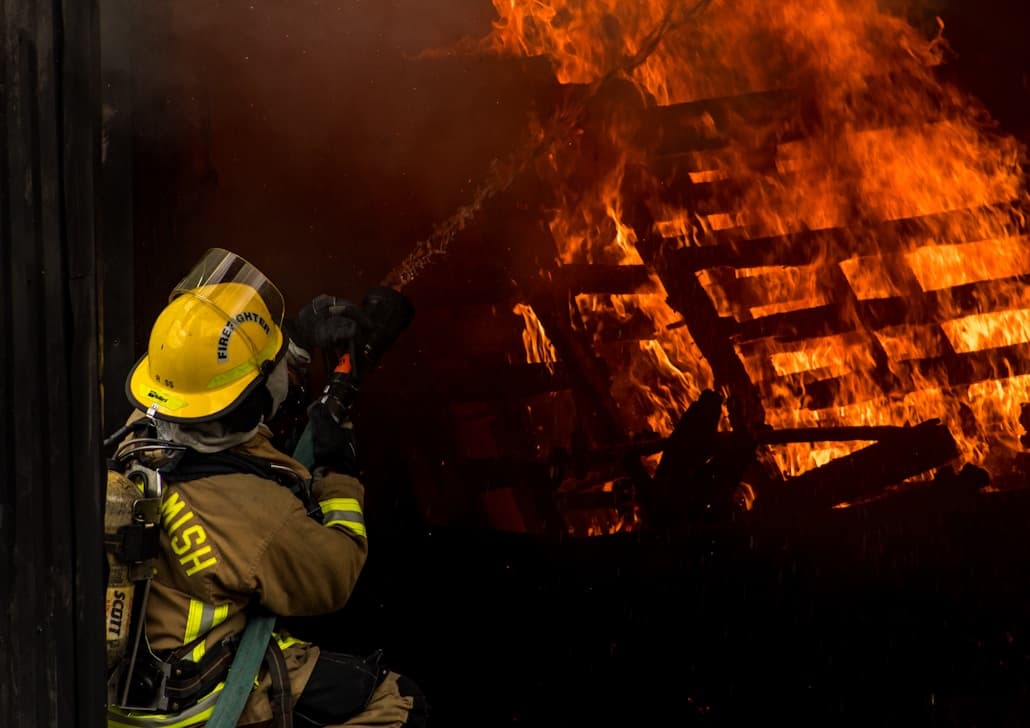
A pan of oil flares, the cabinet above it scorches, the extinguisher does its job and the whole thing is over in four minutes. Then you notice the smell is in the bedrooms, there is a gray film on the bathroom mirror and the air conditioner has been running the entire time. A small kitchen fire is rarely a small air quality event.
This post covers what smoke from a kitchen fire does to a Florida home, why the damage is wider than the burn, what firefighting water adds to the problem and how post-fire contaminant testing tells you what actually needs to be addressed.
The short answer
Kitchen fire smoke carries soot particles, combustion gases and odor compounds that travel through the home on air currents and through the HVAC system. They settle on surfaces, absorb into porous materials and coat the inside of ductwork. The visible damage is in the kitchen; the air quality damage is wherever the smoke went. Post-fire testing maps that extent so cleaning and removal are based on evidence, and it checks for moisture from suppression so mold does not follow the fire.
What burns in a kitchen fire
Kitchen fires are chemically messy because of what is in a kitchen.
- Cooking oil and grease produce heavy, oily soot that smears rather than wipes and bonds to surfaces.
- Plastics from utensils, appliance housings, cabinet laminates and packaging release a range of combustion byproducts and leave a sticky, acidic residue.
- Wood and paper from cabinets and pantry contents produce dry, powdery soot that travels easily.
- Synthetic textiles from curtains, towels and rugs burn into fine particulates and odors that linger.
- Foam and foodstuffs add protein residue, which is nearly invisible but produces a persistent odor.
Protein fires, the kind that start when food burns on the stove or in the oven, are notorious. There is often little visible soot, but the odor saturates paint, cabinets and fabrics and does not respond to ordinary cleaning.
How smoke travels through a Florida home
Hot smoke rises to the ceiling and spreads along it, moving into adjacent rooms through doorways and into the attic through any gap: recessed lights, attic access panels, plumbing penetrations. In a slab home with ceilings at eight or nine feet, the smoke layer reaches every room quickly.
The air conditioning accelerates everything. In Florida, the system is running almost all year. The return pulls smoke into the air handler, deposits soot on the coil and filter, and pushes what gets through into every supply register in the house. Rooms with closed doors still receive smoke through the supply ducts.
Soot particles are small enough to stay airborne for hours and settle slowly. That is why the mirror in a bathroom at the far end of the house has a film the next morning.
Residue, odor and what they do to air quality
Three kinds of contamination matter after a kitchen fire.
| Contaminant | Where it goes | Why it matters |
|---|---|---|
| Soot and particulate | Horizontal surfaces, inside ducts, textiles, HVAC filter and coil | Fine particles stay airborne and re-suspend with activity |
| Combustion gases and VOCs | Absorbed into paint, drywall, wood, fabrics, insulation | Off-gas for weeks, source of persistent odor and irritation |
| Acidic residue from plastics | Metal surfaces, electronics, appliances | Corrodes and etches, and remains reactive |
The EPA notes that people spend roughly 90 percent of their time indoors, and that indoor pollutant levels are often several times higher than outdoor. After a fire, that gap widens. Fine soot particles are in the size range that reaches deep into the lungs, and odor compounds are a source of headaches and irritation. Anyone with symptoms should talk with a physician; the building question is handled by testing.
The water problem nobody mentions
Extinguishing a kitchen fire often means water: from a pot, a hose or a sprinkler. In a Florida home in summer, that water soaks cabinet bases, drywall and the subfloor around the stove. Combined with the humidity and the fact that the air conditioning was turned off or the windows were opened to clear smoke, those materials can begin supporting mold within 24 to 48 hours.
A post-fire assessment that only looks at soot misses this. Moisture mapping around the fire area is part of a complete evaluation, and if materials are wet, drying has the same urgency as it would after a plumbing leak.
What post-fire contaminant testing involves
UES post-fire contaminant testing documents how far the smoke traveled and what it left behind.
- Visual inspection of the fire area, adjacent rooms, far rooms, the attic and the HVAC system.
- Surface sampling for soot and char in rooms at increasing distance from the kitchen to establish the migration pattern.
- Air sampling for particulates and, where warranted, combustion-related compounds.
- HVAC evaluation of the filter, coil, air handler interior and accessible ductwork.
- Moisture mapping of the fire area with thermal imaging and meters to find suppression water.
- Chain of custody delivery to an independent accredited laboratory.
- A written report in the UES Client Portal that defines which areas need professional cleaning, which materials should be removed, whether the HVAC system is contaminated and whether mold is a concern.
If moisture readings are elevated, a water intrusion and damage assessment or a comprehensive mold assessment may follow, depending on how long the materials have been wet.
Why independent testing before restoration
Fire restoration contractors are often on site within hours, and many offer to scope the job themselves. UES does not perform restoration, cleaning or remediation and does not accept referral fees. The testing report describes the actual extent of contamination, which gives you and your insurer a defined scope rather than an estimate shaped by the contractor's capacity. After restoration, follow-up testing confirms the work addressed the contamination rather than just the odor.
First steps after a kitchen fire
- Once the fire department clears the home, turn off the air conditioning until the system is evaluated.
- Open windows briefly to clear visible smoke, then close them to keep humidity out.
- Do not wipe soot with water or household cleaners; it smears and sets. Leave it for testing and professional cleaning.
- Photograph every room, including far rooms and the attic access, before anything is cleaned.
- Remove wet materials around the fire area if they can be moved, and start drying.
- Keep children, pets and anyone with respiratory conditions out of the home until testing is complete.
When to call UES
Call after any fire where smoke left the room of origin, where the air conditioning was running, where odor persists in rooms far from the fire, or where water was used to extinguish it. We serve Orlando, Leesburg, Sanford, Tampa and all of Florida.
Book an assessment online or call (407) 438-4684, Monday through Friday, 9:00 AM to 5:30 PM.
Related reading:
Frequently asked questions
The fire was small and put out quickly. Can smoke still affect the whole house?
Yes. A grease or oven fire that burned for a few minutes can push smoke into every room through the air conditioning return and along ceilings. Soot settles on surfaces far from the kitchen and inside ductwork, and odor compounds absorb into fabrics, drywall and insulation. The size of the flame is not a good guide to how far the smoke traveled.
Is it safe to run the air conditioner after a kitchen fire?
Running the system before the ducts and filter are evaluated can spread soot and odor through the whole house. If the system was running during the fire, residue is likely already inside it. Have the ducts and air handler inspected and tested before resuming normal operation, and change the filter in the meantime.
What does post-fire air quality testing check for?
Testing evaluates soot and particulate residue on surfaces and in the air, char and combustion byproducts, and the extent of smoke migration through the home. It also checks moisture from firefighting water, which can lead to mold within 24 to 48 hours. The results define what needs cleaning, what needs removal and whether the HVAC system is contaminated.
Worried about what you just read?
An independent UES assessment tells you exactly what is going on, what caused it and what to do next. Book online or call.