PM2.5 particulates are fine particles small enough to reach deep into the lungs. Learn their sources in Florida homes, how they behave and how testing works.
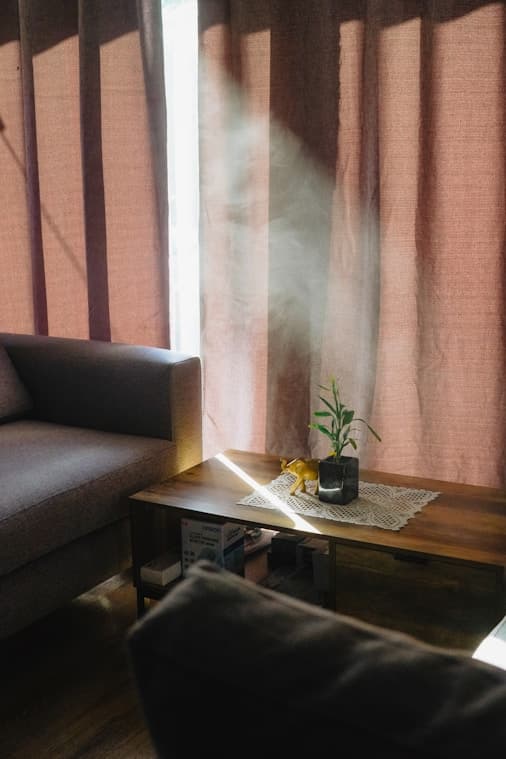
Open the blinds on a Florida morning and you can see dust drifting in the sunbeam. Those visible specks are the large, heavy fraction of what is floating in your air. The particles that matter most for health are far smaller, too tiny to see individually, and they stay airborne for hours. These are fine particulates, known as PM2.5, and they are among the most studied pollutants in indoor and outdoor air.
Defining PM2.5
Particulate matter (PM) is the general term for solid and liquid particles suspended in air. Scientists sort them by size because size governs how they move and where they end up in the body.
| Category | Size range | Behavior | Examples |
|---|---|---|---|
| Coarse (PM10) | 2.5 to 10 micrometers | Settle within minutes to hours; trapped mostly in nose and throat | Pollen, most mold spores, dust mite debris, visible dust |
| Fine (PM2.5) | 2.5 micrometers and smaller | Stay suspended for hours; reach deep into the lungs | Combustion smoke, cooking aerosols, vehicle exhaust |
| Ultrafine | Smaller than 0.1 micrometers | Behave almost like a gas; can cross into the bloodstream | Fresh combustion emissions, some printer emissions |
The 2.5 cutoff is not arbitrary. Particles above that size are largely filtered by the nose and upper airway. Below it, particles bypass those defenses and deposit in the small airways and the alveoli where gas exchange occurs. The smallest fraction can pass through lung tissue into circulation.
The physics of small particles
Why do fine particles stay aloft when a grain of sand drops immediately? Settling speed depends on size and density. A 10-micrometer particle might fall from ceiling height to the floor in a matter of minutes. A 1-micrometer particle may take hours, and a 0.1-micrometer particle is kept suspended indefinitely by the random motion of air molecules around it. In a closed, air-conditioned Florida home with the blower moving air every few minutes, fine particles are continually re-suspended and distributed to every room.
Fine particles also have an enormous surface area relative to their mass. That surface carries adsorbed chemicals, metals and combustion byproducts, which is part of why PM2.5 from smoke is more harmful than an equal mass of mineral dust.
Health effects
PM2.5 exposure is associated with both short-term and long-term effects. Short-term elevations can trigger coughing, throat irritation, asthma attacks and worsening of existing heart and lung conditions. Long-term exposure is linked in population studies to cardiovascular disease, reduced lung function and shortened life expectancy. Children, older adults, pregnant women and people with chronic conditions are most affected.
These findings come from large studies of outdoor air, but indoor exposure often dominates because people spend roughly 90 percent of their time indoors, and indoor sources can push concentrations above outdoor levels. If anyone in your household has unexplained respiratory symptoms, discuss them with a physician. Measurements of indoor particulate levels can give your doctor useful context, but they are not a diagnosis.
Indoor sources in Florida homes
Cooking
Frying, searing, broiling and anything that produces smoke generates large quantities of fine particles. A gas range adds combustion particles on top of the cooking aerosol. A range hood that actually vents outdoors, rather than recirculating through a grease filter, makes a measurable difference. Many Florida homes have recirculating hoods or microwave fans that do nothing for fine particles.
Candles, incense and fragrance
Scented candles are popular in vacation rentals and seasonal homes to mask mustiness. Each one is a small, continuous combustion source. Incense is worse per hour of burning.
Smoking and vaping
Tobacco smoke is one of the most concentrated indoor PM2.5 sources. Vaping aerosol is also predominantly fine particulate.
Outdoor infiltration
Central Florida sees periodic smoke from prescribed burns and wildfires, dust from agricultural operations and traffic emissions near major corridors. Smoke events can raise indoor levels substantially even in a closed house because fine particles pass easily through small gaps. Our post on wildfire smoke and indoor air quality in Florida covers that scenario.
Fire damage
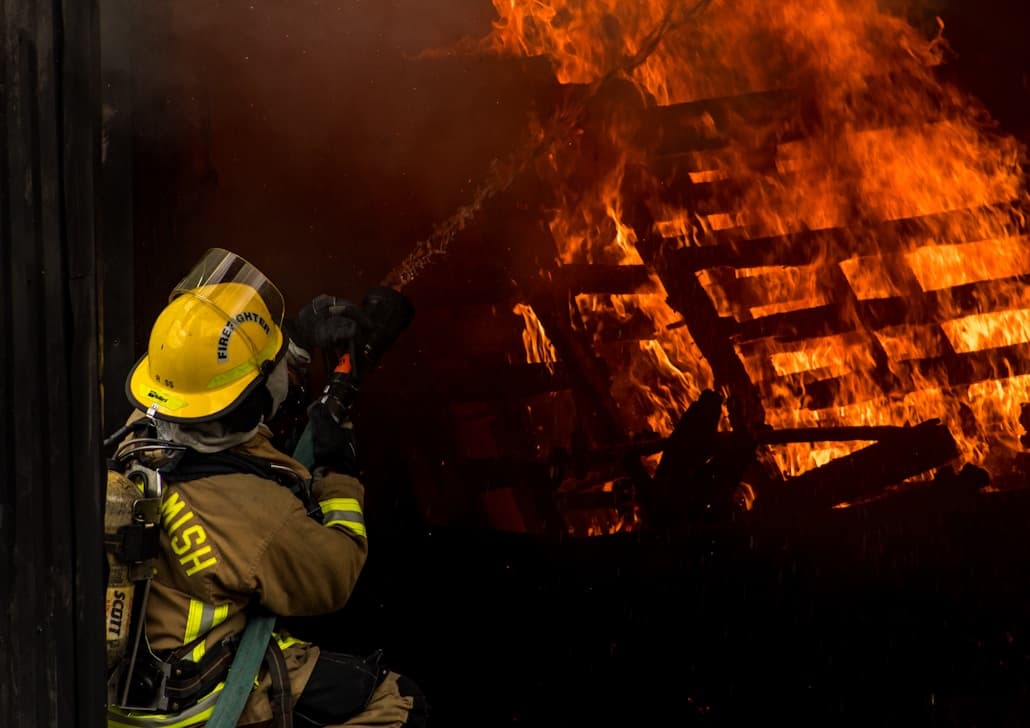
After a house fire, soot is largely fine and ultrafine particulate that settles into every porous surface and re-suspends with air movement for weeks. Post-fire contaminant testing measures what remains.
Renovation
Sanding drywall, cutting tile and demolishing old finishes release mineral dust, much of which is in the fine range. Without containment, it migrates through the whole house.
How particulates relate to mold
Homeowners often ask whether a particle counter can detect mold. The answer is mostly no. Intact spores of common indoor molds are generally several micrometers across, placing them in the coarse fraction, and a particle counter cannot distinguish a spore from a speck of drywall dust. Mold is identified through spore-trap air sampling and surface sampling analyzed under a microscope at an accredited laboratory, which is a core part of a comprehensive mold assessment.
That said, mold colonies shed fragments that can be very small, and heavy particulate loads in a damp home often accompany microbial growth because the same conditions, poor filtration and limited ventilation, contribute to both.
How indoor particulate testing works
A UES indoor air quality assessment that includes particulate measurement typically combines:
- Real-time particle counting. A laser particle counter samples air and reports counts or mass concentration in several size bins. We walk the home comparing rooms, then compare indoors to outdoors at the same time.
- Source activity testing. Where appropriate, we measure before and during a typical activity such as running the range or the air handler to see what moves the numbers.
- Filtration check. We inspect the HVAC filter type, fit and condition, since a poorly sealed or low-efficiency filter lets fine particles circulate. Our guide to MERV ratings explains what the numbers mean.
- Laboratory analysis when needed. For soot, suspected asbestos-containing dust or unusual residues, surface and air samples go to an independent accredited laboratory under chain of custody.
Results are reported through the UES Client Portal with context about what was happening during each reading. Because UES does not sell filters or purifiers, the recommendations are based on the measurements alone.
Lowering fine particulates at home
- Use a range hood that exhausts outdoors whenever you cook, and keep lids on pans.
- Retire scented candles and incense in favor of fixing the odor source they were masking.
- Keep smoking and vaping outside.
- Upgrade to the highest MERV filter your system can handle without restricting airflow, and change it on schedule.
- Run the HVAC fan during and after cooking or during outdoor smoke events to pass more air through the filter.
- Contain renovation work with plastic sheeting and negative pressure, and have the area cleaned before reopening.
- Consider a portable HEPA unit for bedrooms if measured levels remain high after source control. Our comparison of air purifiers versus air quality testing explains why testing should come first.
When to call UES
Testing is worthwhile when household members have respiratory symptoms that seem tied to being home, after a fire or smoke event, before and after a renovation, or when you want to know whether your filtration is actually working. Book an assessment online or call (407) 438-4684, Monday through Friday, 9:00 AM to 5:30 PM.
Related reading
Frequently asked questions
What does PM2.5 mean?
PM stands for particulate matter, and 2.5 refers to particles with an aerodynamic diameter of 2.5 micrometers or smaller. For scale, a human hair is roughly 50 to 70 micrometers across. Particles this small stay suspended in air for long periods and can travel deep into the lungs when inhaled.
Where does PM2.5 come from inside a house?
Cooking, especially frying and searing, is usually the largest indoor source. Candles, incense, fireplaces, tobacco and vaping, gas burners and some printers also produce fine particles. Outdoor sources such as traffic, wildfire smoke and agricultural burning enter through open doors, leaky envelopes and ventilation.
Can mold spores count as PM2.5?
Most intact mold spores are larger than 2.5 micrometers and fall into the coarse particle range, though some species produce spores near that size. Fragments of spores and hyphae can be much smaller and do fall into the fine fraction. Particle counts and mold spore sampling are different tests that answer different questions.
Worried about what you just read?
An independent UES assessment tells you exactly what is going on, what caused it and what to do next. Book online or call.