Why barns, tack rooms, workshops and barn apartments around Ocala, FL collect moisture and mold, and how Marion County owners can inspect and manage them.
Marion County is horse country. Northwest of Ocala, past the city limits toward the farm roads, barns outnumber houses on many parcels, and nearly every rural property from Dunnellon to Ocklawaha has at least one outbuilding: a pole barn, a workshop, a well house, a feed room or a converted garage. These structures are built for function, not for humidity control, and they develop moisture and mold problems that eventually reach the people, animals and equipment inside them.
This guide explains where moisture comes from in barns and outbuildings around Ocala, where growth tends to appear, how it affects attached living and working spaces and what an assessment looks like for these properties.
The direct answer
Barns and outbuildings in Marion County collect moisture from condensation on metal roofing and concrete, from wash racks and water troughs, from wet bedding and hay, from ground moisture through unsealed slabs and from storms that drive rain through open sides and loose panels. Growth concentrates in tack rooms, feed rooms, enclosed offices and apartments, and anywhere equipment or stored goods trap air against a damp surface. Ventilation, drainage, insulation under metal roofs and separating wet activities from enclosed rooms control most of it, and an assessment is warranted when an enclosed space has odor, visible growth or shares air with where people live or work.
Why outbuildings get wet
Condensation on metal and concrete
Clear nights in open pasture country allow metal roofs and uninsulated metal walls to cool well below the air temperature inside the building. Humid barn air condenses on those surfaces and drips. Concrete slabs do the same on humid mornings, which is why a barn aisle can be slick without any rain. Tack rooms with a single window unit are worse: cold supply air chills the walls and ceiling and the rest of the barn's humidity condenses on them.
Water use inside the building
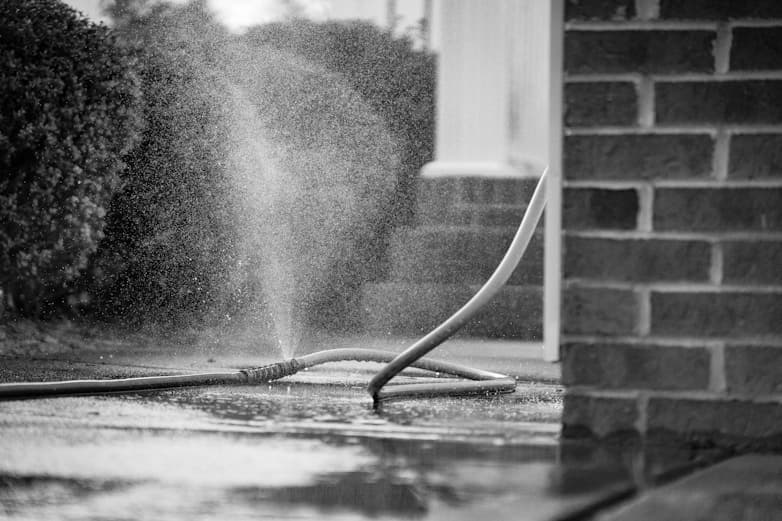
Wash racks, water troughs, hose bibs, automatic waterers and misting fans all add liquid water and vapor. Wash water that runs toward an enclosed room rather than out a drain wets the base of the wall. Spray from hoses soaks feed bags and bedding.
Organic material
Hay, shavings, feed, leather and wood are all mold food. Hay stored damp or exposed to roof drips heats and molds quickly. Shavings and bedding hold moisture. Leather tack in a humid tack room mildews within weeks.
Ground moisture
Many barns have slabs poured without a vapor barrier or have dirt or crushed stone floors. Ground moisture rises continuously. Stalls with mats over a slab trap moisture underneath. Enclosed rooms built on these floors have constantly damp bases.
Storm exposure
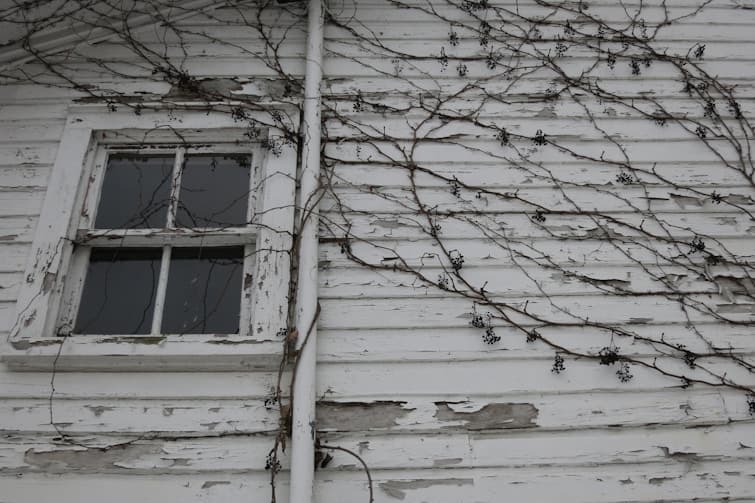
Open-sided barns, roll-up doors and loose panel fasteners let wind-driven rain in during summer thunderstorms and tropical systems. Water pools in low corners and under stored equipment and dries slowly in the shade.
Well equipment
Pressure tanks, softeners and filter housings are often located in a barn or well house. Fittings weep, tanks sweat and a small drip over months saturates the floor and the base of adjacent walls.
Where growth shows up
| Space | Typical finding | Why |
|---|---|---|
| Tack room | Mildew on leather, growth on walls near AC unit | Window unit chills walls, humid barn air condenses |
| Feed room | Growth on bags, pallets, lower walls | Spills, humidity, poor airflow |
| Hay storage | Moldy bales, musty odor | Roof drips, damp storage, no air movement |
| Barn office or lounge | Musty odor, staining at baseboards | Shared air with barn, slab moisture |
| Barn apartment | Closet growth, bathroom ceiling growth | Humidity, poor exhaust, barn air migration |
| Workshop | Growth on stored wood, cardboard, tool cases | Condensation, ground moisture |
| Well house | Growth on walls and floor | Tank and fitting drips, no ventilation |
Why it matters beyond the barn
Growth in an outbuilding would be a maintenance issue on its own, but barns around Ocala are rarely isolated. Many include a groom's apartment, a farm office, a lounge or a viewing room. Air moves from the barn into those rooms through doors, gaps and shared ductwork. Spores and odors come with it. Workers spend long hours in the building. Horses and other animals in stalls breathe the same air, and moldy hay and feed cause their own problems that a veterinarian should address.
Attached or nearby garages and breezeways also connect outbuildings to the main house. A workshop that shares a wall with the home, or a well house whose equipment drains toward the slab, can become the source of a problem that appears indoors.
Managing moisture in Marion County outbuildings
- Ventilate. Ridge vents, cupolas, gable fans and open eaves move humid air out before it condenses. Barn fans help, but they need an exhaust path.
- Insulate metal roofing or install a vapor barrier under the roof deck to limit condensation drip.
- Separate wet areas from enclosed rooms. Wash racks should drain away from tack and feed rooms. Keep hoses and troughs away from enclosed walls.
- Dehumidify enclosed rooms. Tack rooms, offices and apartments benefit from a dehumidifier with a continuous drain rather than relying on an undersized window unit. Target below 60 percent.
- Store hay and feed off the floor on pallets, away from exterior walls and under a dry roof section. Rotate stock.
- Manage drainage. Grade should carry water away from the building. Gutters and downspouts on barns are rare but worth adding on the side facing enclosed rooms.
- Inspect well equipment quarterly for weeping fittings and tank sweat. Put equipment on a curb or pan that drains.
- Seal and condition apartments properly. A barn apartment should have its own exhaust fans vented outdoors, a properly sized AC and weatherstripped doors to the barn.
What an assessment looks like for a barn property
A comprehensive mold assessment of a barn, apartment or office follows the same forensic process we use in homes. The assessor documents conditions, measures temperature and humidity across the barn and in each enclosed room, meters moisture in walls and floors, uses thermal imaging to find wet insulation and cool surfaces, and collects air and surface samples for analysis by an independent accredited laboratory under chain of custody. Where the question is an unusual odor or a suspected source that does not behave like typical mold, our building forensics and specialized diagnostics service, including microbial testing and odor investigations, can isolate it.
UES assesses, tests and diagnoses only. We never perform remediation or accept referral fees from contractors, so the report tells you what the building needs and leaves the choice of who fixes it to you. Results, photos and any remediation protocol are delivered through the UES Client Portal.
When to call UES
UES covers Ocala and Marion County for residential, equestrian and commercial properties, including barns, farm offices and barn apartments toward Dunnellon, Silver Springs, Summerfield and Ocklawaha. If an enclosed room in your barn smells musty, if tack or stored goods are mildewing, if a barn apartment occupant has complaints or if a well equipment leak has gone on longer than you would like, book an assessment online or call (407) 438-4684. Our Ocala service area page has more on how we serve Marion County, and our indoor air quality and allergen testing is often the right tool for an apartment or office where the air is the concern.
Related reading
Frequently asked questions
Is mold in a barn a problem if no one lives there?
It can be. Mold in hay and feed storage affects animals, growth in tack rooms damages leather and equipment, and spores and odors migrate into any attached office, apartment or lounge. If people spend regular time in the building, or if it shares walls or air with living space, it deserves the same attention as a house.
Why does my metal barn roof drip in the morning when it has not rained?
Metal roofs cool quickly on clear Marion County nights, and humid air inside the barn condenses on the underside. The drip is condensation, not a leak. Insulation, a vapor barrier under the roof deck or improved ventilation reduces it, and so does keeping wet bedding and wash water out of enclosed areas.
Can UES assess a barn apartment or farm office?
Yes. Barn apartments, grooms' quarters and farm offices are living and working spaces and are assessed with the same process we use for homes: visual inspection, moisture and thermal mapping, air and surface sampling through an independent accredited lab and a written protocol if growth is found.
Worried about what you just read?
An independent UES assessment tells you exactly what is going on, what caused it and what to do next. Book online or call.