Attic mold in Florida comes from roof leaks, bath fans venting into the attic and AC condensation. Learn warning signs, what grows there and how it is found.
Florida attics are among the harshest spaces in any home: 120 degrees and above in summer, loaded with humidity from the outdoor air, and sitting beneath a roof that takes a beating from afternoon thunderstorms and tropical weather. Most homeowners never look up there. When they finally do, often because a ceiling stain appeared or a home inspector mentioned it during a sale, the question is what caused the growth and how much of a problem it is.
The direct answer
Attic mold in Florida is caused by moisture reaching the wood sheathing, trusses or insulation and staying there long enough for growth to start, which can be as little as two days. The four main sources are roof leaks, bathroom and dryer exhaust venting into the attic, condensation from air conditioning equipment and ducts, and humid outdoor air meeting cool surfaces. Identifying which one is responsible is the first job of an assessment, because the fix is different for each.
The four causes, in detail
Roof leaks
Florida roofs fail at penetrations and transitions more than in the field. Plumbing vent boots crack in the sun, flashing around chimneys and skylights lifts, ridge vents and off-ridge vents let wind-driven rain in during storms, and shingles lose granules and tabs after years of heat and hurricane-force gusts. Water enters, runs down the underside of the sheathing and along the trusses, and drips onto the insulation. Mold follows the water trail: a dark streak on the sheathing below the leak, speckled trusses, and a matted, discolored patch of insulation above the eventual ceiling stain.
Exhaust fans venting into the attic
This is extremely common in Central Florida homes built before the last couple of decades and in homes where a bathroom was added or remodeled. The bath fan duct ends in the attic, or was never connected to a roof or soffit vent, or has fallen off. Every shower pumps warm, saturated air into the attic where it condenses on the nearest cool surface. The result is a localized cloud of mold on the sheathing and trusses directly above the bathroom. Dryer vents that terminate in the attic add lint and a great deal of moisture.
Air conditioning condensation
Most Florida homes have the air handler or at least the ductwork in the attic. Supply ducts carry air in the 50s through a space that is 120 degrees with high dew point. Any tear in the duct vapor jacket, any unsealed joint, any uninsulated boot and any spot where the insulation has compressed becomes a condensation site. Water drips onto the insulation and ceiling drywall below. Air handlers in the attic add a drain pan that can overflow or a condensate line that clogs with algae, dumping gallons onto the attic floor.
Humid outdoor air and night sky cooling
Vented attics pull in outdoor air that, in Florida, is close to saturation for much of the year. At night the roof radiates heat to the sky and the sheathing cools below the dew point of the attic air, so moisture condenses on its underside. This is why attic mold is often widespread and fairly even across the north-facing roof plane rather than concentrated at one leak. It is worse in homes with poorly balanced ventilation, where soffit vents are blocked by insulation or paint.
What grows up there
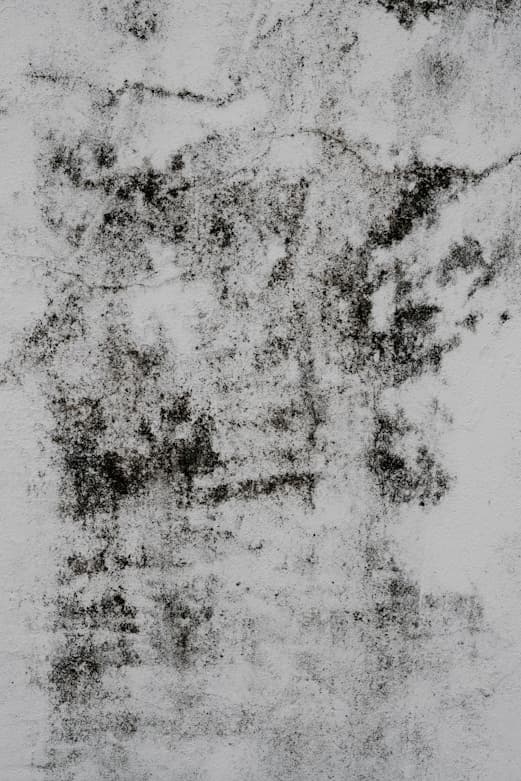
Attic growth is dominated by molds that tolerate heat and periodic drying. Cladosporium and Aspergillus species are the most common, appearing as black speckles, gray-green haze or white-to-tan powdery patches on sheathing and trusses. Where there has been a persistent leak, Stachybotrys and Chaetomium may appear on wet drywall and paper-faced insulation. Dark, uniform staining on sheathing may also be the manufacturer's fire-retardant treatment or weathering, which is why sampling matters before anyone pays for remediation.
Warning signs from below
You do not have to climb into the attic to suspect a problem.
- Ceiling stains, particularly in rings around fans and lights or along exterior walls
- Rust-colored dots on the ceiling where nail heads are condensing
- A musty odor that is worse on hot afternoons or when the air handler runs
- Visible dark growth or matted insulation when you shine a light through the attic access
- Allergy symptoms that worsen in bedrooms under the affected roof plane
- A bathroom fan that runs but does not clear the mirror, suggesting the duct is disconnected
How an assessor evaluates an attic
An attic assessment is physically demanding and is done methodically rather than by glancing from the hatch.
- Visual mapping of growth on sheathing, trusses and insulation, recording the pattern because the pattern reveals the source.
- Moisture readings on sheathing and framing, comparing stained areas to clean areas.
- Thermal imaging of the ceiling from below and of ductwork from above to find condensation and active leaks.
- Inspection of every exhaust duct to confirm it exits the building.
- Inspection of ductwork and the air handler, including the vapor jacket, boots, drain pan and condensate line.
- Ventilation check, including whether soffit vents are open and whether ridge or gable vents are functioning.
- Surface sampling of representative growth and air sampling in the living space to determine whether attic conditions are affecting the home. Samples go to an independent accredited laboratory under chain of custody.
| Growth pattern | Most likely source |
|---|---|
| Streak below a single point on the roof | Roof leak at a penetration or flashing |
| Cloud directly above a bathroom | Exhaust fan venting into attic |
| Drips and staining below ductwork or air handler | HVAC condensation or drain failure |
| Even haze across a whole roof plane, worse on north side | Humid attic air and night condensation, ventilation issue |
A comprehensive mold assessment delivers these findings and a written protocol through the UES Client Portal. When the source is a leak and the damage extends into the ceiling and walls, a water intrusion and damage assessment documents the path for repair and, where relevant, insurance. Because UES assesses only and does not perform remediation or roofing, the protocol describes what the evidence supports and nothing more.
Preventing attic mold in Florida
- Have the roof inspected after any named storm and at least every couple of years, with attention to boots, flashing and vents.
- Confirm every bath and dryer exhaust terminates outdoors with a proper hood.
- Seal and insulate duct boots and repair torn vapor jackets. Have the condensate line cleared regularly if the air handler is in the attic.
- Keep soffit vents clear of insulation and paint.
- Air seal the ceiling plane around can lights, the hatch and penetrations so attic air cannot be drawn into the house.
- Consider a float switch on the attic air handler drain pan so the system shuts off before an overflow.
When to call UES
If you have a ceiling stain, a musty smell that peaks in the heat of the day, visible growth or matted insulation in the attic, or a home inspection report that mentions attic staining, an independent assessment will identify the source and the extent. Book online or call (407) 438-4684, Monday through Friday, 9:00 AM to 5:30 PM. UES serves Orlando, Clermont, Jacksonville and all of Florida.
Related reading:
Frequently asked questions
How do I know if there is mold in my attic without going up there?
Look for ceiling stains, especially around bathroom fans, light fixtures and along exterior walls. A musty odor that is strongest on hot afternoons, when attic air is pushed into the house through recessed lights and attic hatches, is another sign. Sagging or discolored insulation visible from the attic access and rusted nail heads on the ceiling are also common clues.
Does attic mold affect the air inside my house?
It can. Attics are rarely airtight from the living space. Gaps around can lights, plumbing stacks, the attic hatch and HVAC penetrations let attic air move into the rooms below, and leaky return ducts in the attic can pull attic air directly into the system. Air sampling in the house compared with outdoors shows whether that is happening.
Is dark staining on roof sheathing always mold?
Not always. Some sheathing has dark fire-retardant treatment, and older plywood often shows gray weathering from before it was installed. Mold typically appears as fuzzy or speckled growth that follows a moisture pattern, such as around a nail penetration, below a vent or along the eave. Surface sampling settles the question.
Worried about what you just read?
An independent UES assessment tells you exactly what is going on, what caused it and what to do next. Book online or call.