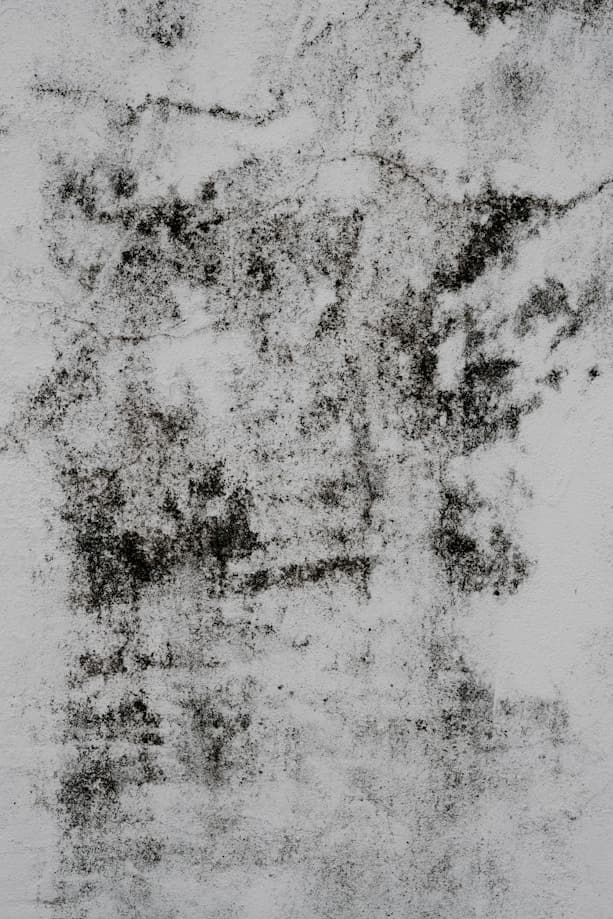
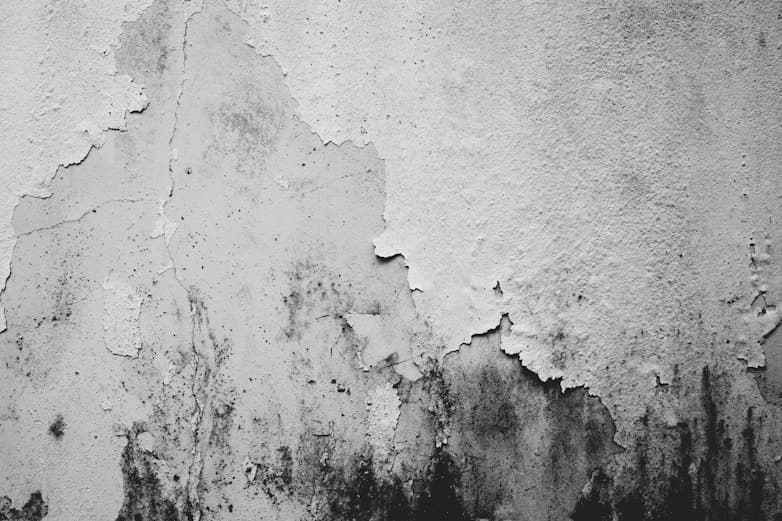
White fuzz on a Florida block wall could be mold or harmless mineral salt. Learn simple tests that separate white mold from efflorescence and what each means.
A chalky white bloom at the bottom of your garage wall, a fuzzy white film on a block wall in the lanai, or a powdery patch where the slab meets the exterior wall can mean two very different things. One is a mineral deposit left behind by evaporating water. The other is living mold. Both point to moisture, but only one needs remediation, and confusing them costs Florida homeowners money in both directions.
The short answer
Efflorescence is a crystalline salt deposit. It forms when water moves through concrete, block, brick, stucco or mortar, dissolves soluble minerals inside the material, and then evaporates at the surface, leaving the minerals behind. It appears only on masonry and cement-based materials.
White mold is a living fungal colony. It grows on organic material it can digest: wood, drywall paper, cardboard, fabric, dust, paint binders and the organic film that builds up on almost any surface. It can appear on masonry too, but only when there is enough organic material or dust on the surface to feed it.
If the white substance is on bare concrete or block and nothing organic is nearby, efflorescence is the likely answer. If it is on wood, drywall, a painted surface or stored belongings, mold is the stronger suspect.
Five quick checks you can do at home
- The water test. Put a few drops of water on the deposit. Efflorescence dissolves or disappears into the surface, because it is salt. Mold stays put, and may darken or look slimy when wet.
- The texture test. Rub a small area with a gloved finger. Efflorescence feels gritty, like fine sand or sugar, and crumbles to powder. Mold feels soft, fuzzy, cottony or slightly greasy and tends to smear.
- The pattern test. Efflorescence follows the path of water through masonry: along mortar joints, in a horizontal band at the slab line, or in a tide mark that stops where the moisture stops. Mold grows in irregular circular colonies that spread outward, often with a fuzzy edge.
- The surface test. Look at exactly what the material is. Salt cannot form on wood or drywall paper. If the white growth is on the back of a dresser, the bottom of a cardboard box or a baseboard, it is not efflorescence.
- The smell test. Efflorescence has no odor. A damp, earthy, musty smell in the area suggests active microbial growth.
None of these replaces a lab, but together they will steer you correctly most of the time.
A side-by-side comparison
| Feature | Efflorescence | White mold |
|---|---|---|
| What it is | Mineral salt crystals | Living fungal colony |
| Where it forms | Concrete, block, stucco, mortar, brick | Wood, drywall, paper, fabric, dusty surfaces, paint |
| Texture | Gritty, powdery, crystalline | Fuzzy, cottony, sometimes slimy |
| Water drop | Dissolves | Does not dissolve |
| Odor | None | Often musty |
| Growth pattern | Bands and joints following water paths | Spreading circular or irregular colonies |
| Health concern | None directly | Allergen and irritant for sensitive people |
Why Florida block homes see both
Most homes built in Central Florida from the 1950s onward use concrete block exterior walls on a monolithic slab. Block is porous. Groundwater, irrigation spray, rain against the base of the wall, and water vapor rising through the slab all move through the masonry constantly. When that moisture reaches an interior surface and evaporates, it leaves salts behind.
Garages are the classic spot. The slab is often uncoated, the walls are usually painted block with no drywall, and the space is rarely air conditioned. Afternoon thunderstorms wet the exterior, the sun bakes it, and the drying cycle pulls minerals outward week after week. A white band a few inches above the floor is almost always efflorescence.
That same persistent dampness, though, feeds mold on everything organic sitting against the wall: cardboard moving boxes, the particleboard back of a workbench, stacked lumber, the bottom plate of a framed interior wall. So the honest answer in many Florida garages is that both are present. The salts are harmless, but they are proof that the wall is wet enough to grow mold on the things you store there.
Which white molds show up in Florida homes
Several common genera appear white or very pale in their early growth:
- Penicillium and Aspergillus often begin as white or off-white colonies before producing colored spores.
- Acremonium forms fine white or pinkish moist colonies on wet drywall and insulation.
- Sporotrichum and some Trichoderma species look white and cottony on damp wood.
- Wood-decay fungi can produce white, thread-like mycelium on framing and subfloors in crawl spaces and under leaking windows.
These are identified by microscopy at the lab, not by eye. An assessor collects a tape-lift or swab from the surface and, where appropriate, air samples to see whether spores are elevated indoors compared with the outdoor air.
What to do about each
For efflorescence: The deposit can be brushed off dry and the surface rinsed. The real task is reducing the water moving through the masonry. Redirect irrigation heads away from the wall, make sure soil and mulch slope away from the foundation, extend downspouts, and repair cracked stucco or failed sealant. If the deposits return quickly on an interior wall, a water intrusion and damage assessment can trace where the water enters and whether adjacent drywall or framing is wet.
For white mold: Small spots on hard surfaces can be cleaned with detergent and water. Growth on porous materials, growth that covers more than a small area, or growth with a persistent musty odor should be evaluated first. A comprehensive mold assessment documents the extent, identifies the species, locates the moisture source with moisture meters and thermal imaging, and produces a written protocol that a remediation contractor can follow. Because UES does not perform remediation, the finding of "this is salt, not mold" is one we deliver happily and often.
The moisture is the real finding
Whether the lab comes back with mineral salts or Penicillium, the lesson is the same. Something is keeping that wall wet, and in a Florida home that moisture will eventually find organic material to grow on. Fixing drainage, sealing penetrations, improving ventilation in unconditioned spaces and keeping stored goods off the floor and away from exterior walls prevents both problems.
When to call UES
If the white growth is on drywall, wood or belongings, if it covers more than a small patch, if it comes back after cleaning, or if a musty odor accompanies it, it is time for an independent assessment. Book online or call (407) 438-4684, Monday through Friday, 9:00 AM to 5:30 PM. UES serves Orlando, Leesburg, The Villages and homes throughout Florida.
Related reading:
Frequently asked questions
Is efflorescence harmful?
Efflorescence itself is just mineral salt, mostly calcium and sodium compounds, and it is not a health hazard. It does tell you that water is moving through the masonry and evaporating at the surface, and that moisture can feed real mold growth on paint, drywall or wood nearby. Treat it as a moisture warning rather than a contaminant.
Can white mold and efflorescence appear in the same place?
Yes, and they often do. Both show up where masonry stays damp, such as the base of a garage wall or a block wall behind a shower. The salts crystallize on the bare block while mold colonizes the paint, the baseboard, stored cardboard or the back of furniture a few inches away.
Do I need to test white mold?
If the growth is on porous material, covers more than a small area, or you cannot find and fix the moisture source, an assessment is worthwhile. Testing identifies what is growing and whether spores are elevated in the air, and the inspection finds where the water is coming from so the fix is permanent.
Worried about what you just read?
An independent UES assessment tells you exactly what is going on, what caused it and what to do next. Book online or call.