New paint, flooring and cabinets off-gas VOCs for weeks. Learn the chemistry, why Florida homes trap it and when post-renovation air testing makes sense.
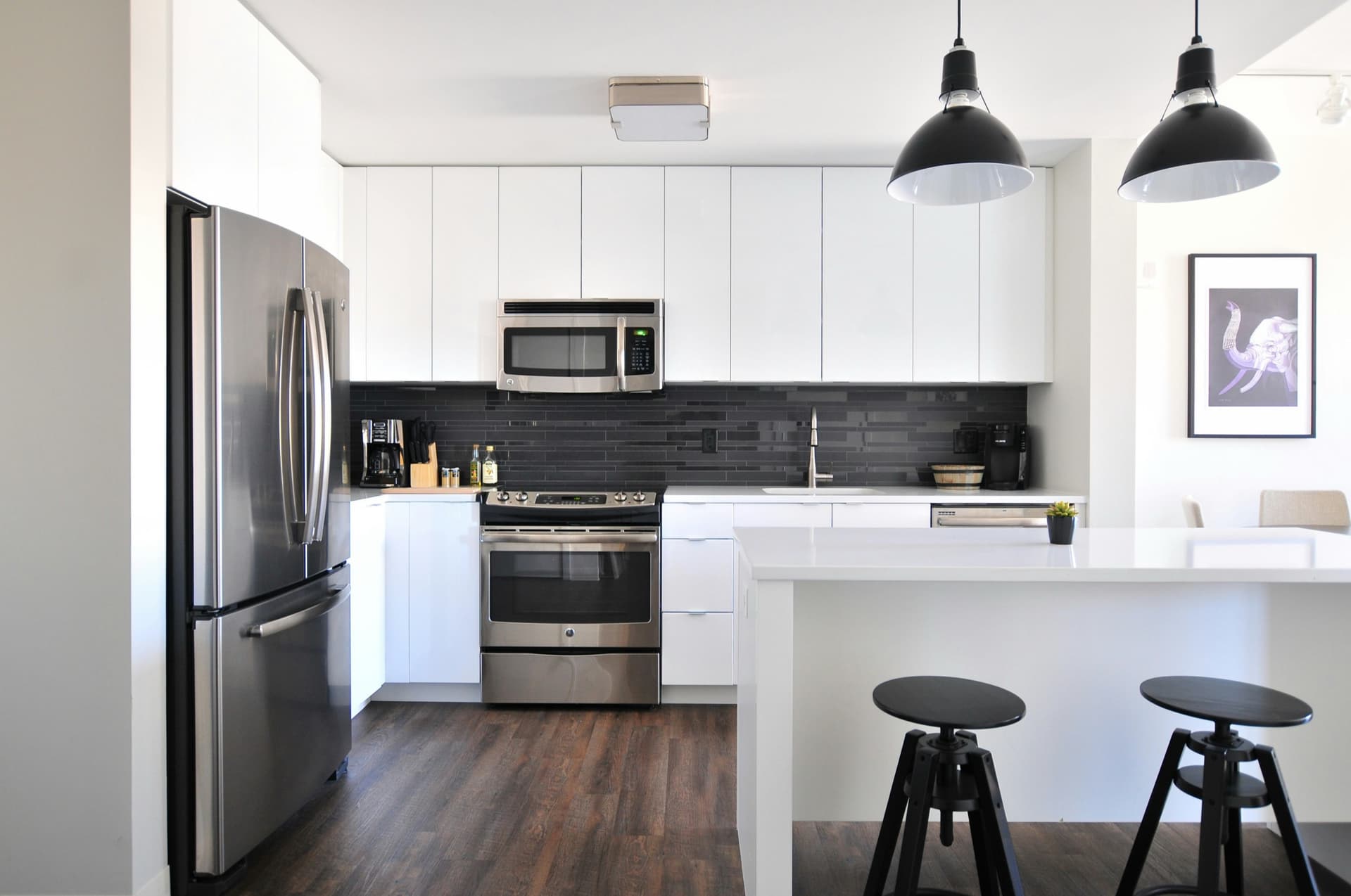
The contractors have packed up, the dust is wiped away and the new kitchen looks exactly like the rendering. Then you spend an evening in it and notice your eyes burning slightly and a headache settling in. The renovation did not just change how your Orlando home looks; it introduced dozens of new materials that are all releasing chemicals into the air at once, and your air-conditioned house is holding onto every one of them.
What off-gassing is
Off-gassing is the release of volatile organic compounds (VOCs) from a solid or liquid material into the air. The chemistry differs by product, but the physics is the same: molecules with enough energy escape the material's surface and become gas. Warmer temperatures give molecules more energy, so emission rises with heat. Over time the material's reservoir of volatile compounds depletes and the rate falls, following a curve that is steep at first and then long and flat.
Two broad categories of renovation products behave differently.
Wet-applied products such as paint, primer, stain, adhesive, caulk, grout sealer and polyurethane finish release most of their VOCs during curing, when solvents and carrier compounds evaporate to leave the solid film behind. This phase is intense and relatively short, from days to a few weeks.
Manufactured products such as particleboard cabinets, MDF trim, laminate and engineered flooring, carpet, vinyl and foam insulation contain compounds bound within the material that escape slowly over months or years. Formaldehyde from composite wood resins is the best-known example; our post on formaldehyde in new homes and furniture covers it in depth.
What a typical renovation releases
| Product | Representative compounds | Emission pattern |
|---|---|---|
| Latex paint | Glycols, glycol ethers, some residual monomers | Strong for days, tapering over weeks |
| Oil-based paint and polyurethane | Aliphatic and aromatic hydrocarbons, ketones | Very strong initially, longer tail than latex |
| Flooring adhesive and carpet | Styrene-related compounds, 4-phenylcyclohexene (the "new carpet" smell), various solvents | Strong for the first weeks, persistent at low levels |
| Composite wood cabinets and trim | Formaldehyde, acetaldehyde | Low to moderate, very long duration |
| Vinyl flooring and wallpaper | Plasticizers, residual solvents | Moderate, long duration |
| Caulk and sealants | Acetic acid (silicone), solvents, isocyanates (some foams) | Strong during cure, then low |
| Spray foam insulation | Isocyanates, amine catalysts, blowing agents | Strong during cure; proper cure and ventilation are critical |
Many of these compounds have odors you will recognize. Some, including formaldehyde at typical indoor concentrations, are present below most people's odor threshold while still irritating eyes and airways.
Why Florida renovations off-gas longer
Three local conditions extend the problem.
Heat. Emission rates climb with temperature. A renovation completed in July in a house that sits at 78 degrees releases far more per day than the same work in a cool climate. Garages and sunrooms used as staging areas get hotter still.
Humidity. Moisture participates in the breakdown of urea-formaldehyde resin and can affect curing chemistry of some coatings and adhesives. Humid conditions also slow the drying of wet-applied products, extending the curing emission phase.
Sealed homes. Air conditioning keeps windows closed, and most residential systems add no fresh outdoor air. Compounds released indoors stay indoors, diluted only by leakage. Concentrations build through the day and are highest overnight when the house is closed and still.
Health considerations
Elevated VOC concentrations are associated with eye, nose and throat irritation, headache, dizziness, nausea and worsening of asthma. Sensitivity varies widely; one family member may feel fine while another cannot sleep in the renovated room. Children, pregnant women, older adults and people with respiratory disease or chemical sensitivity deserve extra caution during the first weeks after a major renovation. Long-term exposure to certain compounds, including formaldehyde and benzene, carries additional concerns documented by health agencies.
We cannot tell you whether your symptoms are caused by your renovation. A physician can evaluate symptoms; an assessment can tell you what is in the air. The two together are far more useful than either alone.
Reducing off-gassing before, during and after
Before and during the work
- Specify low-VOC or zero-VOC paints, adhesives and sealants, and no-added-formaldehyde or certified low-emitting composite wood.
- Ask the installer to unroll carpet and uncrate cabinets in a ventilated space for a few days before installation when feasible.
- Isolate the work area with plastic sheeting and, for larger projects, negative air pressure exhausting outdoors.
- Schedule painting and flooring for the cooler, drier months when windows can be opened.
After the work
- Ventilate aggressively on any day the outdoor dew point allows, with windows open and fans running. In summer, a short morning window with the AC off and windows open can help, followed by closing up before the humidity surges.
- Run the HVAC fan on auto and change the filter, which will have loaded with construction dust.
- Keep indoor temperature moderate rather than warm. A cooler house emits less.
- Hold humidity below 60 percent, ideally 30 to 50 percent. See ideal indoor humidity for Florida homes.
- Delay moving sensitive occupants back into the renovated room for a week or two if possible.
- Avoid adding air fresheners or scented candles to mask odor; they add VOCs of their own.
- Consider activated carbon filtration as a supplement for gases while the emission curve flattens, understanding it is not a substitute for ventilation and source control.
Renovation and hidden mold
Many Florida renovations begin because of water damage: a slab leak that ruined the kitchen floor, a roof leak that stained the ceiling, a hurricane that soaked a wall. If the drying and demolition were incomplete before new finishes went on, mold can continue growing behind brand-new drywall and under new flooring. A chemical smell can mask a musty one for weeks. When symptoms persist after the VOC curve should have flattened, hidden moisture is the next suspect, and a comprehensive mold assessment with moisture meters and thermal imaging can find it without tearing out the new work.
How post-renovation air testing works
A UES indoor air quality and allergen testing visit after a renovation typically includes a walkthrough with a VOC screening meter to compare rooms, laboratory VOC and formaldehyde air sampling in the renovated space and a control area, particle counts to check for lingering construction dust, humidity and temperature readings, and spore-trap air samples where water damage was part of the project. Samples travel under chain of custody to an independent accredited laboratory, and results arrive in the UES Client Portal with an interpretation of likely sources based on the materials installed. UES does not sell products, perform remediation or recommend contractors for a fee, so the findings are not steered toward a particular fix.
When to call UES
Call when renovation odors persist beyond a few weeks, when a sensitive family member reacts to the new space, when a large volume of composite wood or flooring was installed, when the project followed water damage, or when you want a documented baseline for a vacation rental or a home you plan to sell. Book an assessment online or call (407) 438-4684, Monday through Friday, 9:00 AM to 5:30 PM. For a quick overview of services, visit our FAQ.
Related reading
Frequently asked questions
How long does off-gassing last after a renovation?
The strongest release is in the first days and weeks, when wet-applied products such as paint, adhesives and sealants cure. Composite wood and some flooring continue releasing at lower levels for months or longer. Florida heat and humidity extend the tail. The only way to know where your home stands is to measure.
Is the new-renovation smell dangerous?
The smell is a mixture of volatile organic compounds, and some of them are respiratory irritants or have longer-term health concerns at sustained exposure. For most healthy adults, short-term exposure causes irritation at most. Children, pregnant women, older adults and people with asthma or chemical sensitivity are more affected. If anyone has symptoms, talk with a physician.
Should I test the air before moving back in after a renovation?
Testing is worthwhile when a sensitive person will occupy the space, when the smell is strong or persistent, when a large volume of composite wood or new flooring was installed, or when the renovation involved water damage repair that may have left hidden mold. A baseline test also gives you something to compare against if symptoms develop later.
Worried about what you just read?
An independent UES assessment tells you exactly what is going on, what caused it and what to do next. Book online or call.