Black spots on window sills and frames are a condensation problem in Florida homes. Learn the dew point physics, what grows there and when it means a leak.
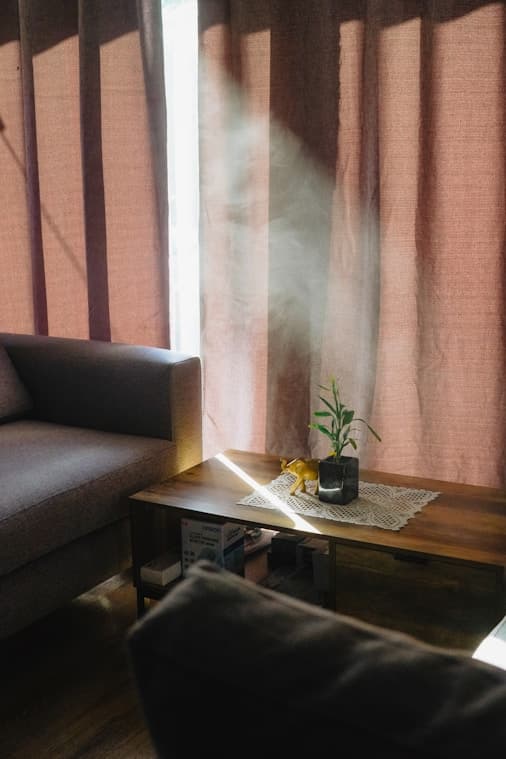
Dark specks along the bottom edge of the window frame, a black line where the glass meets the gasket, and a fuzzy patch in the corner of the sill behind the curtain are a familiar sight in Florida homes. Windows are where indoor air meets the outdoor temperature most directly, so they are the first place condensation forms and the first place mold shows up when humidity is too high.
The physics in plain terms
Air holds water vapor. The warmer the air, the more it can hold. Dew point is the temperature at which a given parcel of air becomes saturated and water starts to condense out of it. If a surface in your home is colder than the dew point of the air touching it, water forms on that surface. That is all condensation is.
Indoor air at 76 degrees and 55 percent relative humidity has a dew point of about 59 degrees. Any surface below 59 degrees will sweat. Raise the humidity to 65 percent and the dew point climbs to about 63. Now more surfaces qualify, and windows are usually the first because glass and metal frames conduct heat so well.
In Florida the pattern runs two ways:
- Summer: The indoor side of the window is cooled by the air conditioner. Where a cold supply register blows directly on a window, or where the glass is shaded and the room is kept in the low 70s, the glass can fall below the indoor dew point, especially in a humid house. Water forms on the inside.
- Winter cold snaps: On the handful of nights when outdoor temperatures drop into the 30s and 40s, single-pane and older aluminum-framed windows become very cold on the inside. Indoor air that was comfortable at 50 percent humidity now has a dew point above the glass temperature, and the windows stream.
Either way, the water runs down and collects on the sill and in the bottom of the frame, where dust gives mold something to eat.
What grows on windows
Window mold is dominated by Cladosporium, which is one of the most common molds in Florida outdoor air and lands on windows constantly. It appears as black or dark olive specks on gaskets, frames, sills and the lower inches of the drywall return. Alternaria and Aspergillus are also common. On wood sills that stay wet, growth can progress to decay fungi that soften the wood.
Caulk and rubber gaskets are especially vulnerable because the pigment-producing molds work their way into the material, which is why the black line at the glass edge does not fully clean off.
Condensation or leak?
This distinction is the most important question in any window mold case, because the fixes are completely different.
| Clue | Condensation | Leak |
|---|---|---|
| Timing | After cold nights or heavy AC use | After rain, especially wind-driven |
| Location | On the glass, gasket and sill surface | Wall below or beside the window, one lower corner |
| Moisture meter | Sill surface damp, wall below dry | Drywall below the window reads wet |
| Pattern | Even along the bottom edge of the glass | Wedge or streak spreading downward from a corner |
| Outside | Nothing unusual | Cracked stucco, failed sealant, missing flashing at the window perimeter |
Window leaks in Florida block homes usually come from failed sealant between the window frame and the stucco, from stucco cracks above or beside the opening, or from windows installed without proper flashing. Water gets behind the frame and into the wall cavity, where it wets the drywall from behind. Thermal imaging from inside shows a cool wedge spreading down from the lower corner, and moisture readings confirm it.
When window mold signals a bigger problem
Specks on a vinyl frame that wipe off and stay off are a humidity issue. Call in an assessor when:
- Growth returns within a few days of cleaning on multiple windows
- The drywall below or beside a window is stained, soft or bubbling
- Wood sills are dark, soft or crumbling
- There is a musty odor at the window that persists when it is dry
- Baseboards below a window have swelled or pulled away
- Condensation is heavy enough to pool and run on most mornings
A comprehensive mold assessment includes moisture readings and thermal imaging around every suspect window, surface sampling of the growth and, where the extent warrants it, air sampling in the room to see whether indoor spore counts are elevated. If the evidence points to water entering around the frame, a water intrusion and damage assessment traces the path and documents it. For homes where condensation is widespread and the cause is a humidity or HVAC issue, indoor air quality and allergen testing characterizes the broader environment. Results, photos and a written protocol are delivered through the UES Client Portal. UES assesses and never remediates, so the protocol addresses what the readings show and nothing more.
Controlling condensation in a Florida home
- Keep indoor humidity below 60 percent, preferably near 50. This lowers the dew point so fewer surfaces are cold enough to sweat.
- Do not aim supply registers at windows. Redirect the vanes or have the register relocated if a window sweats constantly.
- Open curtains and blinds during the day. Closed window treatments trap cold air against the glass and block air circulation.
- Run the air conditioner in auto, not fan-on, and avoid raising the thermostat to the 80s when away.
- On cold nights, raise the thermostat a degree or two rather than letting the house drop, and run ceiling fans to keep air moving across the glass.
- Wipe condensation from sills in the morning when it occurs, and clean frames with detergent and water.
- Replace gaskets and caulk that are stained through, since cleaning will not remove embedded pigment.
- Inspect exterior sealant and stucco around windows yearly and after storms.
Double-pane, low-emissivity windows sweat far less because the inside pane stays closer to room temperature. If you are replacing windows for other reasons, this is a genuine condensation benefit.
When to call UES
Call when window mold keeps returning on several windows, when the wall below a window is stained or soft, when wood sills have begun to deteriorate, or when you cannot tell whether you are looking at condensation or a leak. An independent assessment answers that question with measurements rather than guesses. Book online or call (407) 438-4684, Monday through Friday, 9:00 AM to 5:30 PM. UES serves Orlando, Daytona Beach, Tampa and all of Florida.
Related reading:
Frequently asked questions
Why do my windows sweat on the inside in Florida?
Inside condensation happens when the glass or frame is colder than the dew point of the indoor air. In Florida that is a summer problem in homes that are kept very cold or that have high indoor humidity. It also happens in winter during the few cold nights when single-pane glass drops well below room temperature. Either way, water forms on the glass and runs down onto the sill.
Is mold on a window sill a serious problem?
On a vinyl or aluminum sill, it is mostly a humidity warning and a cleaning job. On a wood sill, drywall return or the wall below the window, it can mean the material is staying wet and may have started to rot or grow mold inside. If the growth comes back within days of cleaning or extends below the sill, have it checked.
How can I tell condensation from a window leak?
Condensation appears on the glass first, is worst in the lower corners and on cold mornings or after heavy AC use, and leaves a line where the water pooled on the sill. A leak shows up in the wall below or beside the window, often at one lower corner, after rain rather than after temperature changes, and the drywall there reads wet with a moisture meter.
Worried about what you just read?
An independent UES assessment tells you exactly what is going on, what caused it and what to do next. Book online or call.